


Govt hails S&P rating stability as proof of economic recovery and policy consistency
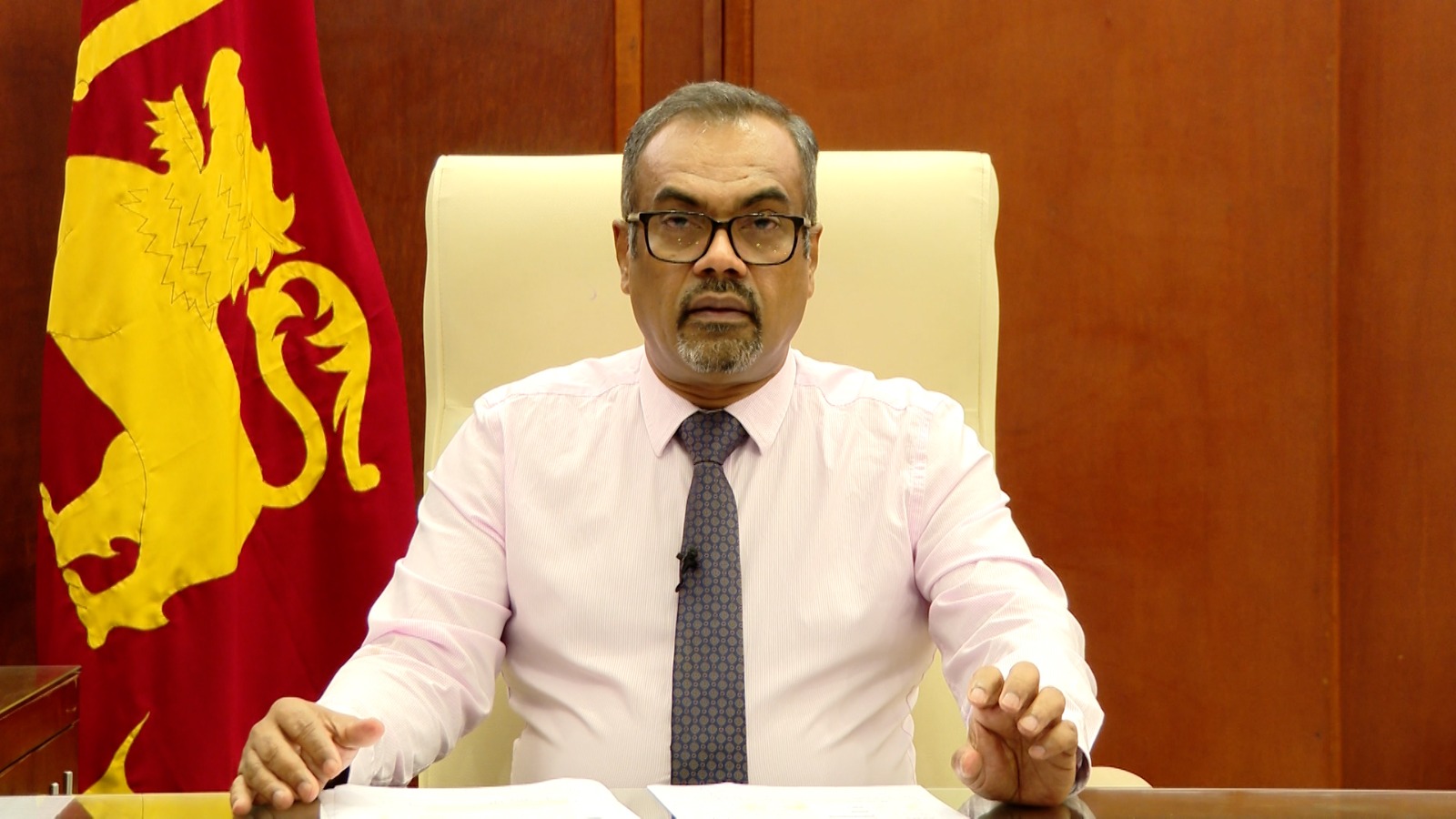
According to the latest assessment conducted by S&P Global Ratings in July 2026, the Government has successfully maintained Sri Lanka’s sovereign credit rating at its previous level, reflecting the country’s continued economic stability.
It is particularly noteworthy that this stability has been preserved despite significant external shocks, including the impact of cyclone Ditwa and the conflict in the Middle East. By maintaining its economic policy direction without deviation, the Government has been able to safeguard this stability, which we regard as a significant achievement.
The assessment also reflects a notable improvement in investor confidence through the enhancement of Sri Lanka’s Transfer and Convertibility Assessment (T&C Assessment), an important indicator for international investors. The T&C Assessment measures a country’s ability to facilitate the transfer of investment returns abroad and the conversion of domestic currency into foreign currency for the repayment of loans, interest and other financial obligations.
Sri Lanka’s credit assessment, which was at the highly vulnerable ‘CCC’ level in 2022, improved to ‘CCC+’ in 2025 and has now advanced to ‘B-’ (B minus) in 2026. This progress has been driven particularly by the implementation of sound macroeconomic policies and improved political stability. Having moved beyond the period of economic instability, Sri Lanka has strengthened its foreign exchange liquidity and continued to build up its reserves, which have contributed significantly to this improvement. Therefore, achieving the ‘B-’ level should be recognised as a significant milestone and an important reflection of the country’s improving economic fundamentals.
It is important to note that these foreign exchange reserves were not accumulated through import restrictions or by suppressing economic activity. Rather, they have been built while allowing normal economic activity to continue, supported by the Central Bank’s strategic interventions to maintain monetary and financial stability. This assessment has been made by internationally recognised institutions with the expertise, experience and technical knowledge to evaluate such matters, rather than by commentary circulated on social media. As such, it deserves careful consideration. The decision to assign Sri Lanka a ‘B-‘ T&C Assessment has also been influenced by the country’s progress in strengthening debt transparency and improving engagement with its creditors, as recognised by international financial institutions.
Past experience has demonstrated the consequences of inadequate debt transparency. At one stage, even certain audit reports highlighted shortcomings in the recording and reporting of public debt, making it difficult to determine where some borrowings had been accounted for. A lack of transparency in public debt management undermines investor confidence. Strengthening transparency and maintaining open and credible engagement with creditors are therefore essential to enhancing confidence among investors and the international financial community.
The latest assessment also demonstrates that, compared with 2025, Sri Lanka has made significant progress in strengthening its engagement with investors and enhancing debt transparency.
As a result, Sri Lanka has achieved a score of 43.67 out of a possible 50, representing an improvement of 6.34 points from the 37.33 recorded in 2025. This places Sri Lanka fourth among the countries assessed in 2026.
We believe that this marked improvement in investor confidence and debt transparency has been a key factor contributing to Sri Lanka’s upgraded ‘B-‘ T&C Assessment.
Overall, it can be concluded that several key policy measures implemented by the Government have contributed to these positive outcomes. Despite a range of external and domestic challenges, the Government has remained committed to consistent and prudent economic policies, enabling the country to achieve strong economic progress. Notably, Sri Lanka recorded 5.1 per cent economic growth in the first quarter of 2026, reflecting the resilience of the economy and the effectiveness of the policy measures adopted.
It is equally important for the Government to generate sufficient revenue to finance public services and capital investment. Sound fiscal management depends not only on setting realistic revenue targets but also on ensuring that those targets are achieved. Since assuming office, we have closely monitored revenue collection on a daily basis to ensure that it remains aligned with our fiscal objectives, and we have consistently met our targets.
As of July 2026, the Government had achieved 63.5 per cent of its projected annual revenue target. Based on current performance, we are confident that the revenue target set for 2026 will not only be achieved but is also likely to be exceeded. This demonstrates the effectiveness of our fiscal planning, financial discipline and revenue collection efforts. It also provides assurance that the expenditure commitments outlined in the Budget will be fully implemented for the benefit of the public. The Budget includes allocations to maintain the public administration and deliver essential public services, and we have the financial capacity to meet these commitments without difficulty.
Similarly, the Government has the necessary fiscal space to finance the capital expenditure allocated under the Budget. Where delays occur in utilising these funds, they are generally related to implementation mechanisms, administrative efficiency or procedural constraints, rather than a lack of financial resources. Overall, the Government’s strong fiscal discipline and improved revenue performance have placed it in a sound position to fund both its recurrent and capital expenditure commitments.
The Government has also been able to continue building foreign exchange reserves without restricting economic activity or slowing economic growth. A few months ago, there were concerns that the exchange rate would depreciate significantly, leading to economic instability, with claims that the US dollar could rise to Rs. 400–500. However, the latest assessment has demonstrated that such concerns were unfounded. The key achievement is that Sri Lanka has strengthened its foreign reserves while allowing normal economic activities to continue. This has become an important factor in improving investor confidence and reflects greater stability in the economy.
At the same time, we must recognise that several challenges remain. Some challenges, including domestic governance and political issues, can be addressed through effective policy measures. However, there are also structural challenges and external factors beyond the country’s immediate control. One of the most significant challenges is the substantial debt burden created by imprudent and unnecessary borrowing decisions made by successive governments in the past. As a result, the Treasury was required to allocate more than Rs. 2,500 billion for interest payments alone in 2025, placing considerable pressure on development expenditure. We are addressing these challenges gradually through a strategic approach. Progress has already been made through the implementation of a medium-term debt management framework, which has also received recognition from international institutions. Sri Lanka is gradually moving towards greater reliance on Treasury bonds and securing longer-term financing at more stable and lower interest rates. The latest assessment highlights positive indications that the country is strengthening debt sustainability and improving its long-term financial stability.
Another challenge is that a portion of the existing debt was obtained in the past for projects that were unsuccessful or generated limited economic returns. Managing the consequences of such borrowing remains a challenge and the Government is taking steps to address this issue responsibly. In addition, Sri Lanka must remain prepared to face external shocks, including natural disasters and disruptions arising from geopolitical conflicts such as the situation in the Middle East. These challenges require a strong and resilient economy capable of absorbing external pressures, and Sri Lanka has already made progress in strengthening such resilience. One area requiring continued attention is the impact of global energy market fluctuations. As Sri Lanka’s transport sector remains heavily dependent on imported fuel, structural changes will be necessary in the future to reduce this vulnerability. At present, dependence on imported fuel remains a challenge, along with limitations in fuel storage capacity. The Government is therefore taking necessary measures to address these issues and strengthen energy security.
It is important to emphasise that these achievements have been made possible through sound decision-making, policy consistency, political stability and effective governance. As the Government continues this work, the support and contribution of all stakeholders will be essential to sustaining the progress achieved and ensuring that the benefits of economic stability reach the people of Sri Lanka. (PMD)
The post Govt hails S&P rating stability as proof of economic recovery and policy consistency appeared first on Newswire.