

Microfinance law sparks criticism from activists
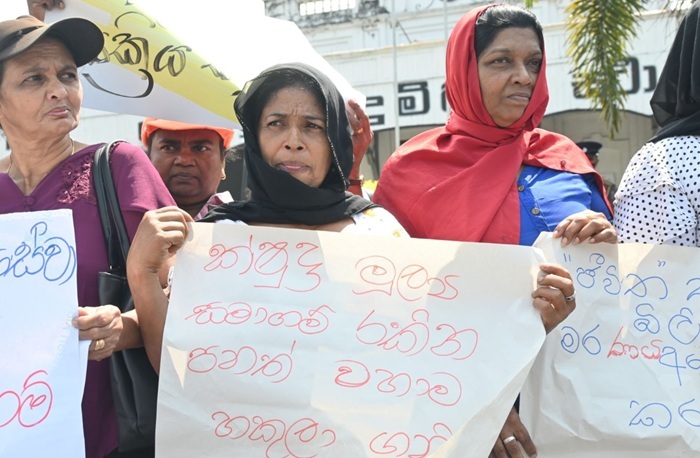
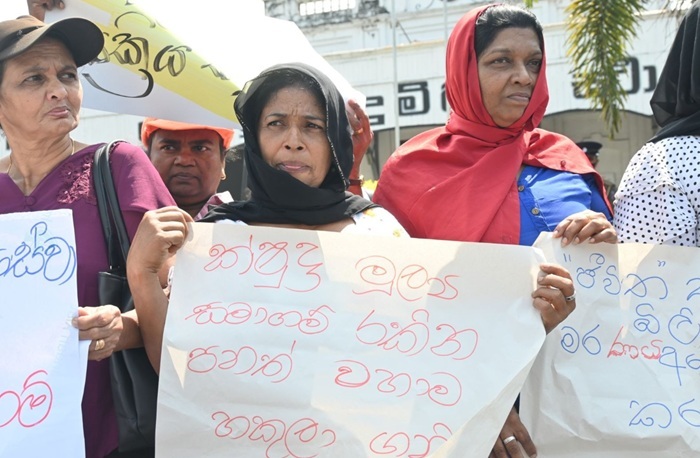
The passage of the Microfinance and Credit Regulatory Authority Bill in Parliament on 4 March has sparked sharp criticism from grassroots organisations and activists.
While the government hails the new law as a step toward licensing and supervising Sri Lanka’s under‑regulated microfinance and moneylending sector, groups such as the Yukthi Collective argue it will deepen the burden on rural women borrowers rather than provide relief.
They warn that the Act, shaped by international loan conditionalities, overlooks debt justice, fails to mandate women’s representation in the new Authority, and risks dismantling community‑based lending networks that have long served as lifelines for vulnerable households.
Full statement:
The Microfinance and Credit Regulatory Authority Bill was passed into law by the Parliament of Sri Lanka on 4 March. According to Deputy Minister of Finance and Planning Dr. Anil Jayantha, the main object of the Act is to establish an Authority to “license and supervise the under-regulated microfinance and moneylending sector, aiming to protect borrowers from exploitation and ensure financial stability”.
However, the Yukthi Collective is saddened and disappointed that a government which pledged to take “measures to alleviate the burden of predatory microfinance loans with high interest rates on women” (NPP Manifesto, 2024: Page no. 44), will now add to their unbearable weight.
The new Act, as virtually all legislation enacted by Anura Kumara Dissanayake’s government, is a legacy of the anti-working-class Ranil Wickremesinghe regime. It evades the root causes of the microfinance trap and ignores debt justice for women borrowers.
It fails in understanding the connections between household debt and public debt. The vicious cycle of national debt is sustained by a lack of growth in economic activity because of poor access to affordable credit.
It fails to make equal representation of women mandatory in the new Authority. If representatives of women borrowers and their self-run organisations are not present in the regulatory body, how will its members know of their lived experiences and make decisions that value women’s unpaid and paid contributions to sustaining life?
System Change:
Millions of indebted households voted for the NPP with hope and expectation of ‘system change’. But instead of honouring its manifesto promise to them, the government has let them down in the law-making process; as well as the focus and substance of the new Act.
It is appalling that NPP parliamentarians, including some of its women members, appear not to have read and understood the bill they enacted into law, nor spoke to the rural credit community providers in their electorates for their views.
Predatory lending exists in the formal and informal sectors. Within this ecosystem, the Act fails to understand, identify, and prohibit predatory lending and recovery practices. It is a cover for the Central Bank’s failure to properly regulate ‘Licensed Finance Companies’ in the interests of citizens.
The biggest offenders are the big finance companies, in which some parliamentarians are deposit-holders. Therefore, some lawmakers benefit from excess profitmaking through exploitative practices, at the expense of poor mostly rural women.
Where law reform should discipline the bullies and thugs in credit delivery, it will instead wipe out, through over-regulation, community-based and managed lenders such as death donation societies, farmer associations, and urban and rural women’s collectives, which have been a lifeline for vulnerable working-class women and a defence from harmful recovery practices.
Structural Adjustment Programmes:
The motivation for this new law are the market- and capital- friendly structural reforms insisted by International Financial Institutions; not the concerns and needs of those at the mercy of predatory lenders.
From the Microfinance Act 2016, to the 2023 version of the Ranil Wickremesinghe regime, the Asian Development Bank (ADB) through its loans has been a promoter of these regressive reforms.
The 2026 Act, with some changes suggested by the Supreme Court in 2024 and hardly any of the changes demanded by affected communities, has been moved forward by the NPP government in line with ADB loan conditionalities.
The path of de-regulation for banking, finance, trade, and investment; and over-regulation of poor people’s savings and credit institutions, smacks of the bias to big capital, which the NPP in opposition once criticised.
Reforms needed:
The financial and banking reforms we want to see are to make credit from state banks and public funds accessible and affordable to women producers in agriculture and micro and small business operators; with decent wages and social protection for workers; that improve household opportunity for a dignified livelihood and decent lives. (Newswire)
The post Microfinance law sparks criticism from activists appeared first on Newswire.