

President Launches ‘Himikama’ Freehold Deed Programme
The Government has planned to release a certain extent of land, following a highly systematic study, in line with new economic strategies, while allocating land required for national food security and agriculture.
President Anura Kumara Dissanayake stated that the objective of the present Government is to attract to the country the economies created by contemporary technological and scientific advancements as Sri Lanka moves towards economic transformation.
The President pointed out that countries around the world have achieved development success only by being able to absorb the technologies available at the time and that today Sri Lanka is facing the consequences of failing to do so.
The President further emphasised that, in order to progress in proportion with the technology and science that exist in the modern world, opportunities must be provided for industries built on such technology. Otherwise, subordinating land to an outdated inherited economy is not a scientifically sound approach.
President Anura Kumara Dissanayake made these remarks this afternoon (27) while attending the inauguration of the national programme to distribute ‘Himikama’ freehold title deeds at the North Central Provincial Council Auditorium in Korakahawewa, Anuradhapura.
Under the Land Development Ordinance No. 19 of 1935, lands granted on permits and grants have been developed and utilised by farming communities and the general public. However, the absence of absolute ownership over such lands has created various difficulties in utilising them for human needs, development requirements and in developing them as economic units.
Accordingly, steps are now being taken to remove the conditions attached to permits and grants issued under the Land Development Ordinance and to issue a freehold title deed in accordance with Section 2 of the State Lands Ordinance No. 8 of 1947. Under this programme, ‘Himikama’ freehold title deeds will be issued for permits and grants voluntarily surrendered to the State and the programme will be implemented island wide.
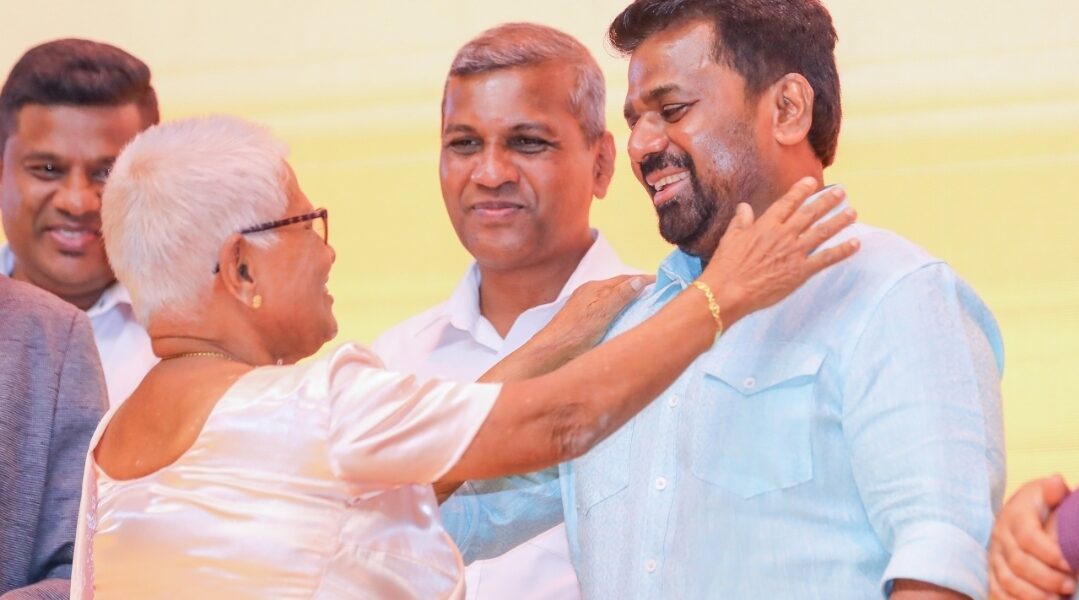
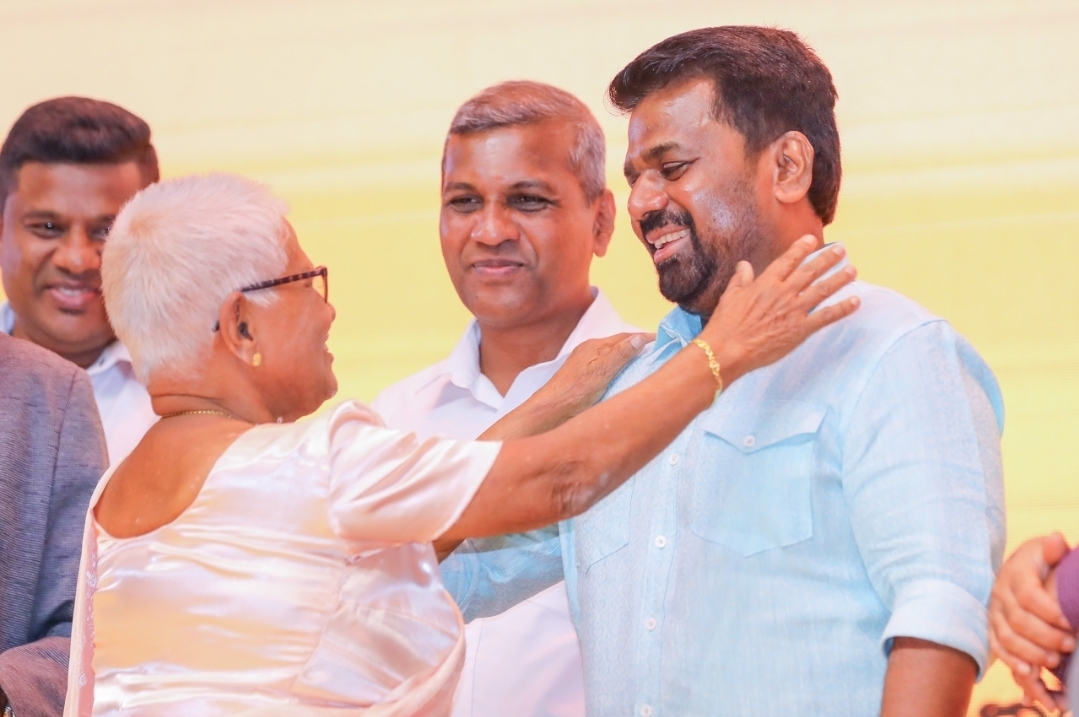
Today (27), 500 ‘Himikama’ freehold title deeds were distributed to beneficiaries in the Anuradhapura District, with the President symbolically presenting deeds to 50 beneficiaries.
Addressing the gathering, President Anura Kumara Dissanayake further stated that his Government believes that, when entering a new world, it is unnecessary to bind people’s lands with complex legal constraints. Therefore, a decision has been taken to grant freehold deeds to enable people to engage more easily in economic activities. The President also requested all recipients to protect their land and fulfil the responsibility of passing it on to their children.
Minister of Housing, Construction and Water Supply, H. M. Susil Ranasinghe stated that the ‘Himikama’ freehold title deed programme has been implemented under a systematic plan, resolving issues that existed in the land deed distribution programme carried out by the previous Government.
He also noted that the present Government has ended the culture of underutilising land in the country.
Deputy Minister of Land and Irrigation, Aravinda Senarath stated that, for the first time, steps have been taken to grant land ownership to the people free from political motives.
Expressing further views, President Anura Kumara Dissanayake stated:
We know that, in the context of our country’s culture, land is not merely property; it is kinship. Each of us has a relationship tied to our parents, ancestors and land. Therefore, we have a culture deeply connected with land. Economically as well, we represent an economy based on agriculture, where land is the most important resource. Hence, everyone holds the dream of owning their own land.
However, when compared with most countries in the world, Sri Lanka is a nation with a relatively small land area, while having a population of over 22 million. Approximately 350 people live per square kilometre. Therefore, if we do not move towards a proper land management policy with foresight, our future will face serious conflicts over land and the forward trajectory of our economy could collapse entirely.
When focusing on the future, we must seriously consider whether continuing to build individual houses is sustainable. Otherwise, our entire land area will be covered by housing, leaving no room for economic strategies. Thus, it is necessary to formulate a new land-use plan based on sound scientific analysis, statistical data and economic needs. This has become a priority task of the Ministry and funds have been allocated for this purpose in the current Budget.
Since land is a major partner in our economy, many disputes have arisen in relation to land. Therefore, we must resolve the complexities within land laws. However, at one time, such complexities were necessary, because land did not remain in the hands of the citizens. It was not wrong to grant land with certain conditions in order to ensure that land remained with the people.
In the past, land was granted under various labels such as Jayabhoomi, Swarnabhoomi and Ratnabhoomi, all conditional grants. But now we are entering a new world. I do not believe we should continue to bind people’s lands with complex legal restrictions. Therefore, we have decided to grant freehold deeds to facilitate their economic activities. Accordingly, these ‘Himikama’ deeds are being issued as freehold titles.
There is an important matter here. In the past, land remained with village communities because of legal restrictions that prevented sale or mortgaging. Once freehold titles are granted, these actions become possible. There is therefore a risk that people may dispose of their land. Hence, I urge all recipients of these deeds not to sell the land that belongs to you and your children.
You must protect it. We will fulfil your economic needs. Ultimately, land is sold only when economic needs remain unmet, not out of willingness, but out of necessity. We understand this.
Another issue we have faced is that, for a long time, we used our land in line with the economic strategies of earlier eras. While allocating land required for food security and agriculture, we are planning to release a portion of land in accordance with new economic strategies.
Countries achieve development success only if they can absorb the technologies available at a given time. If they fail to do so, the gap between nations continues to widen. This is what happened to us. Particularly in the twentieth century, the world achieved significant advances in science and technology, but we failed to transform our economic programmes accordingly. As a result, a mismatch has emerged between global markets and our production.
Therefore, we must develop the infrastructure required for an economy built on the technology and science that the modern world has achieved. This era is one of rapid leaps in technology. If we fail to attract industries based on science and technology during this period, the gap between our country and others will widen further. Hence, we have planned to allocate a certain extent of land for these new economic strategies.
If we can establish an AI centre, allocating a portion of farmland for that purpose is not wrong. If it is necessary to create a green energy park, allocating land for that purpose is also not wrong. To move forward in proportion with the technology and science of the modern world, opportunities must be provided for industries built upon them, which will require a considerable extent of land. Without considering this, attempting to attract the modern technology and science-based economy to our country while keeping land tied to an outdated inherited economy is not scientifically sound.
Our primary expectation is to bring the economic gains we have achieved to rural communities. We have already secured significant economic achievements. Our economic stability enabled us to face the disaster situation caused by Cyclone Ditwah with resilience. No development activities were halted midway due to the disaster. Funds have been allocated both for ongoing development work and for reconstruction related to the disaster. We must build an economy capable of withstanding any situation. Above all, our main objective is the eradication of poverty. Poverty is a social tragedy and all of us have a responsibility to end it. The issuance of these freehold land title deeds can be regarded as a special opportunity in that endeavour.
Members of Parliament, other public representatives of the area, Secretaries of the relevant Ministries, the Commissioner General of Land, state officials and beneficiary members of the public were present at the occasion.
President’s Media Division (PMD)
27-02-2026
The post President Launches ‘Himikama’ Freehold Deed Programme appeared first on Newswire.